I’ve tried just about every system for remembering jiu-jitsu techniques. A leather notebook that lasted three weeks. Apple Notes for two years. Notion for about six months, until I admitted I was spending more evenings on the database schema than on the techniques inside it. The thing that finally stuck was almost embarrassingly simple, and it took me five years of false starts to find it.
If you’ve already read why bullet-list notes fail jiu-jitsu, this is the practical companion: what I actually do now, and the systems I burned through first.
The systems that didn’t survive
The leather notebook lasted exactly long enough to look impressive. Then I forgot it at the gym one Saturday, and by Monday the habit was dead. The real friction wasn’t even the writing — it was the searching. A paper notebook is unsearchable from the parking lot, which is exactly where you need to consult it.
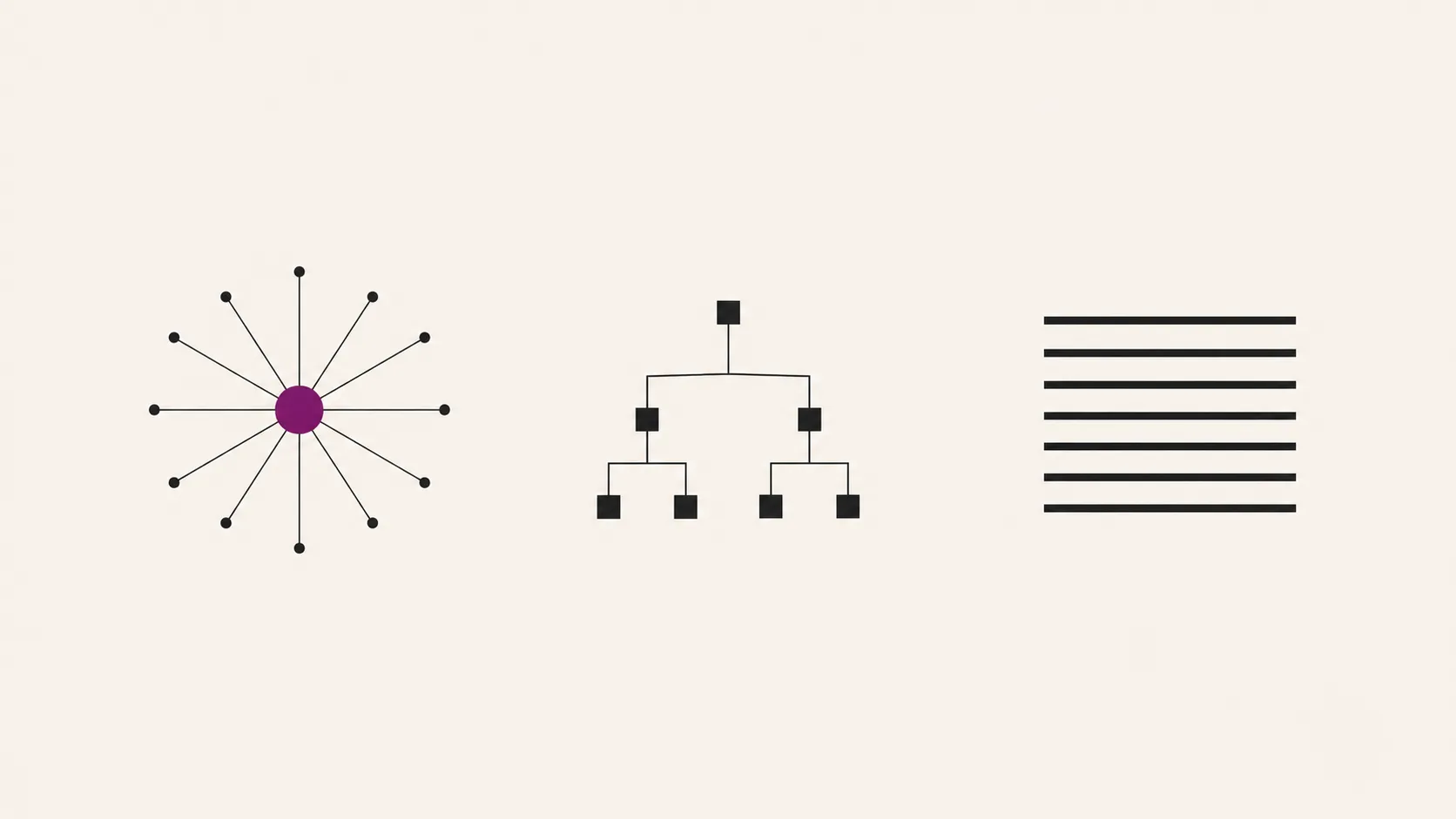
Apple Notes lasted two years, all of it in one giant reverse-chronological file. By the end I had around 11,000 words I couldn’t find anything in. Linear notes scale badly for grappling because grappling isn’t linear, and the structure of the content fights the structure of the format the entire time.
Notion failed in a more seductive way. I built a beautiful schema — tags for position, technique type, opponent grip variant, whether I’d drilled it, when I’d last revisited it — and spent most of six months refining it. By the time the system was right, I’d stopped taking notes, because the system itself had become the hobby.
There’s a common thread in all three (and in the other BJJ notebook apps I tried): I kept treating the system as the goal, and the reviewing — the only part that actually makes techniques stick — kept getting deferred.
The loop that worked
Two steps, lower-friction than anything above.
The capture step is a 60-second voice memo in the parking lot, always within ten minutes of leaving the mat. The time constraint is doing real work: sixty seconds forces me to pick the one thing worth keeping instead of trying to summarize the whole class. (The full version of the voice memo habit has the three prompts I use when nothing comes to mind.)
The second step, on a good night, is converting that memo into something with shape — for me, a flowchart. Some nights I do it and some nights I don’t, and I’ve stopped feeling guilty about the misses. The memo alone carries most of the value. The chart is what pays back three weeks later, when I go looking for the thing I half-remember learning.
Why the voice memo is the hinge
The way you describe a position twenty minutes after a round is wildly different from how you’d describe it the next morning. The vocabulary, the phrasing, the small physical details — most of it decays overnight. Voice in the parking lot catches what writing at the desk the next day can’t.
The less obvious advantage is that voice has effectively no friction. No desk, no typing on a phone with sore fingers, no spelling. That’s why the habit survives the weeks when I’d have written nothing at all, and over a year, those weeks are where the compounding happens.
<a class=“inline-cta” href=“https://grappleflows.com/voice?utm_source=blog&utm_medium=referral&utm_campaign=post-how-to-remember-bjj-techniques&utm_content=inline-cta&ref=blog”
Try it free Turn a 60-second voice note into a flowchart you'll actually re-open. Create a free account →
A two-week test
Don’t change anything about your current setup. Just add the memo: sixty seconds in the parking lot, three sessions a week, for two weeks. Then sit down and listen to all six in a row.
What surprised me when I first did this is that you start hearing patterns in your own voice. The same position comes up twice. A specific phrasing repeats. Your own voice, accumulated over time, turns out to be a better coach’s eye than anything an app will hand you.
If the memos feel valuable after two weeks, the next step is making them findable — that’s where structure earns its place. Until then, capture is the only part that matters.
Common questions
Why do I forget BJJ techniques so fast?
You're losing the *shape* of the move — the order of reactions and the branch points — not the move itself. Notes that capture decisions, not just steps, survive the week.
What's the best way to take notes after BJJ class?
A 60-second voice memo on the drive home, turned into a flowchart that night. Voice catches the texture; the chart preserves the decision tree.
How many techniques should I be learning per week?
One. Maybe two. The cap isn't input — it's review bandwidth. You can only cement what you can revisit.