For most of my white and early blue belt I was a generalist. I “kind of” played closed guard, “kind of” played half guard, had a half-decent open guard, and was learning DLR. In practice that meant I had a B-minus version of four guards. Meanwhile the training partners I couldn’t pass — and there were a lot of them — had a deep A-version of one.
I wish someone had said this to me earlier: pick one guard and live in it for six months. That single decision moved my game more than anything before or since, and it’s helped every grappler I’ve talked into trying it. What follows is the rough plan, not a rigid program.
Why one guard beats five
Every guard you “kind of” play steals review bandwidth from the one you actually use under pressure. A deep system already has answers to your opponent’s third move; a shallow one is still figuring out their first. Six half-known guards lose to one deeply-known guard, and the arithmetic explains why: spread your exposure across five positions and each gets a fifth of your reps. A specialist with the same mat time accumulates five times the depth in their chosen position, and that gap shows up immediately in rolls.
Picking the right guard
Don’t pick the cool one. Pick the one that already works for your body.
Long limbs point toward lasso, spider, and De La Riva. Shorter and denser builds fit closed guard, half guard, and butterfly. Stiff hips favor knee-shield half and z-guard (if that’s you, the half guard for older grapplers post goes deeper). Mobile hips with weaker grips suggest butterfly and X.
If two feel close, pick the one your favorite higher belt also plays. Coaching access is a force multiplier, and you shouldn’t waste it. I picked closed guard partly because the upper belt I learned the most from played a beautiful one, and watching him drill it weekly was worth more than choosing something I might have liked better in the abstract.
The six-month sketch
I don’t believe in rigid month-by-month plans, but the order matters more than the calendar.
Entries come first. Before anything else, you need to be able to get to your guard — from standing, from bottom, from a failed sweep. Three entries minimum, drilled cold until they’re automatic. A guard you can’t reach is a guard you don’t have.
Then sweeps, learned in pairs. Every guard has a primary sweep and a counter-sweep for when the primary gets defended. Learn them together, not as two separate techniques, because the counter-sweep is what turns a stuffed attempt into a finished one.
Around month three, add the submission threat. A sweep that never threatens a finish gets stuffed by anyone competent. Pick one submission from the guard and let it sit as the implicit or else under every sweep attempt.
Then retention — the part everyone skips. Every common pass attempt against your guard, with one answer each. This is what separates a guard you play from a guard you have. It’s also the boring part, which is exactly why most people never do it.
Re-guard after that. When they get past the legs, how do you get back? This is the difference between losing a position and losing the round.
The last stretch is chaining. String everything together in flow rounds with no resistance, then with graduated resistance. By this point the pieces exist; the work is making them connect under pressure.
You can’t run this from memory
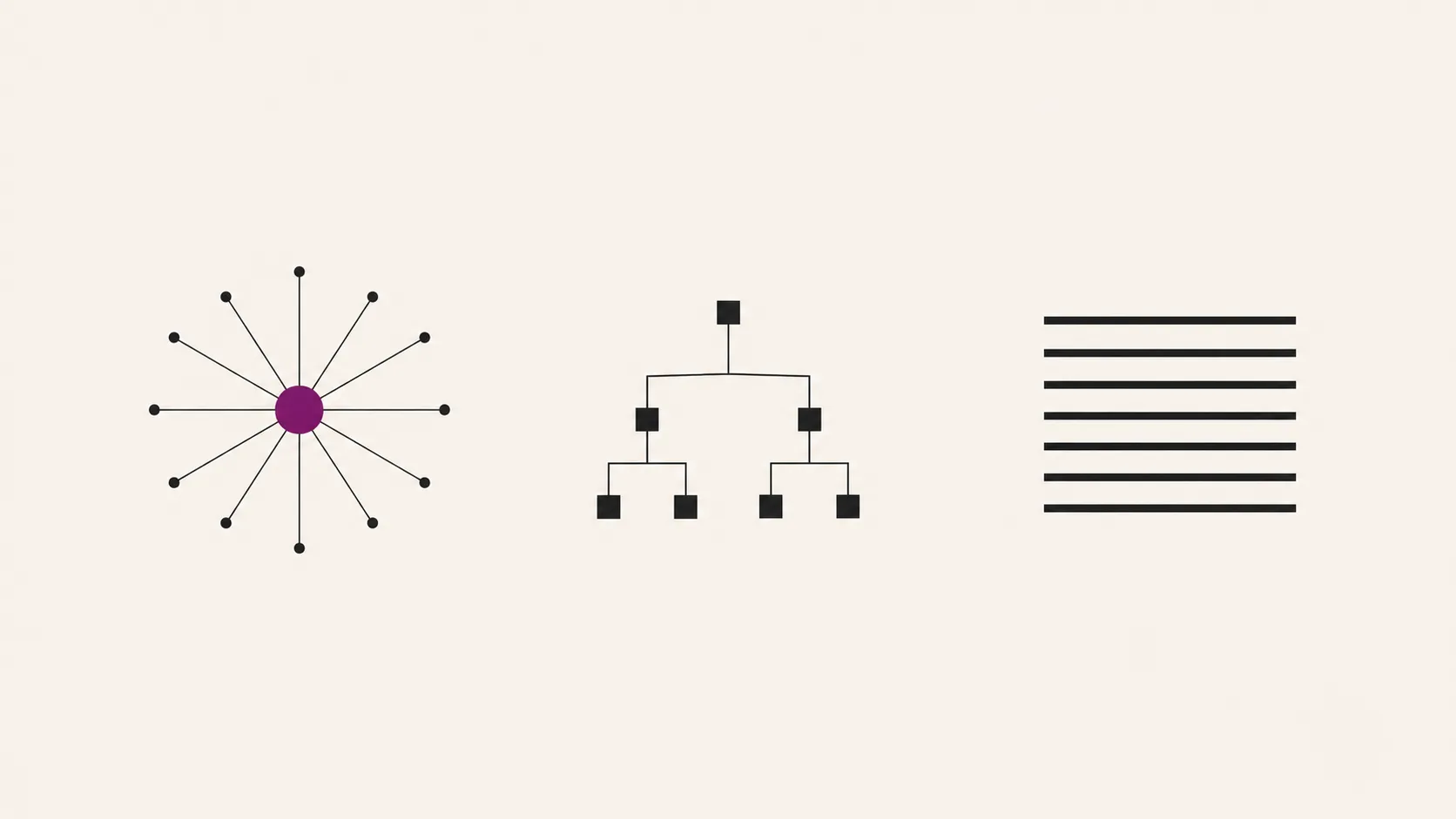
The whole point of the project is the graph — guard → pass attempt → retention → reset → sweep → submission. A flowchart per branch, all linked together, is the only format I’ve found that holds the shape. And you’ll need to update it constantly: things you discover in week four will change your understanding of week one, and you want somewhere to revise without rewriting from scratch. (If you’re skeptical that the format matters this much, I’ve compared flowcharts against mind maps and linear notes at length elsewhere in this journal.)
<a class=“inline-cta” href=“https://grappleflows.com/register?utm_source=blog&utm_medium=referral&utm_campaign=post-build-bjj-game-around-one-guard&utm_content=inline-cta&ref=blog”
Try it free Map your one guard into a single connected flowchart. Create a free account →
What “done” looks like
At the end of six months, you can roll with someone your level and insist on the guard. They know it’s coming, you go there anyway, and it works more often than it doesn’t. That’s the bar.
The unexpected bonus — and the reason I keep recommending this to people — is that the second guard takes about half as long. You’ve learned how to learn a guard. The framework transfers; only the techniques change. If you want a compressed version of that process, I wrote up the four-week protocol I use for adding a new guard.
If you’ve been a generalist for a while and your game feels stalled, this is almost always the move. Pick one. Live there for six months.