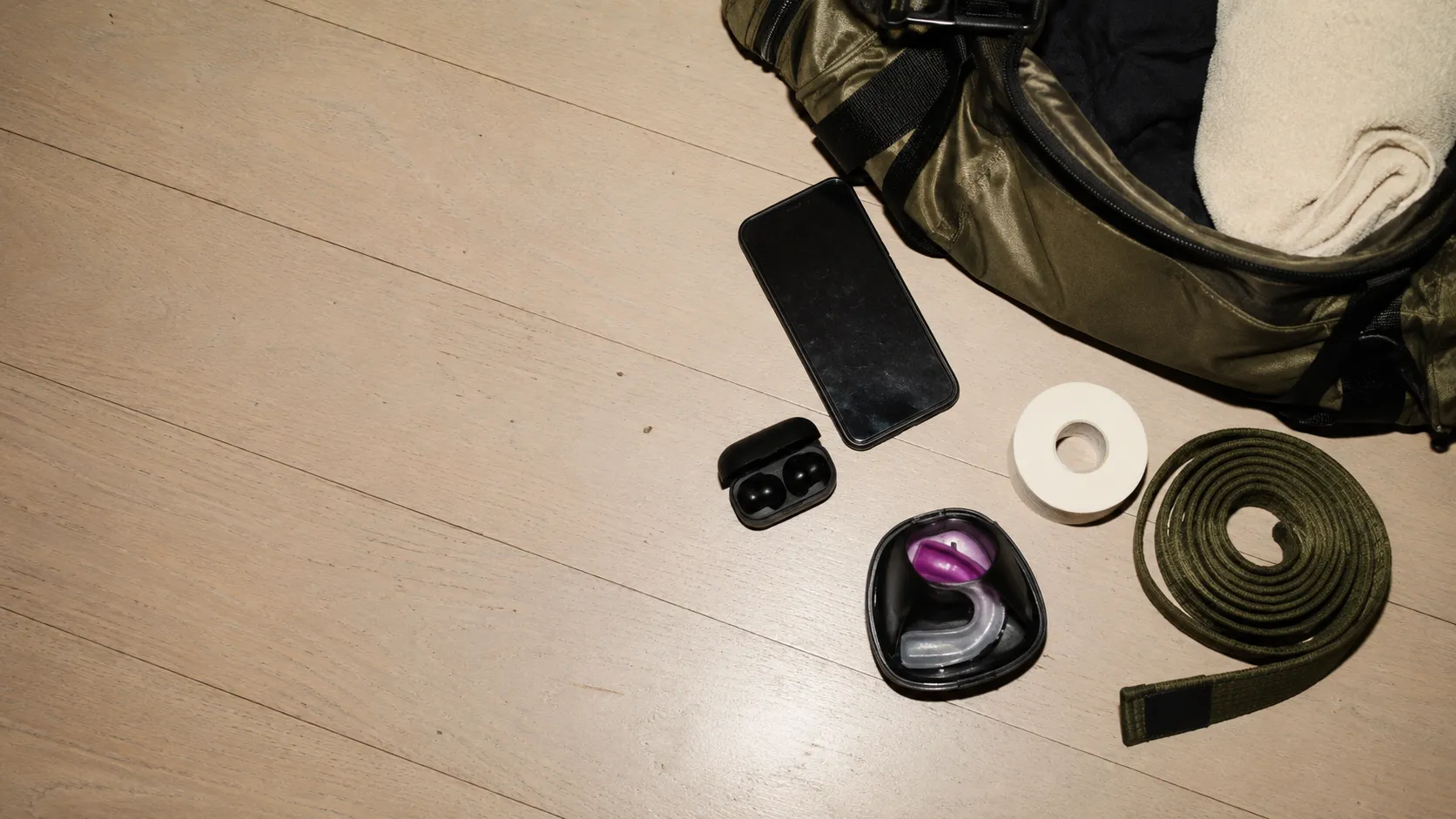
The folder on my phone called “BJJ” has been through about three purges. Most apps in it follow the same arc: install with high hopes, open daily for a week, realize I’m performing diligence instead of actually getting better, uninstall within the month. What survives is a much smaller set than the App Store would suggest you need.
Here’s what’s still on the home screen in 2026. This isn’t a comprehensive directory — it’s the actually-opened-this-month list, plus the reasoning behind what got cut.
Training volume trackers
BJJ Tracker is the only app I’ve kept in this category, and I open it maybe twice a month. It’s genuinely the best at what it does. The reason I use it rarely is that volume tracking matters most when you’re inconsistent, and right now I’m not. If you’re trying to build a training habit, this one earns a spot on your phone. If you already train three or more times a week and your gym tracks attendance, you can probably skip it.
Smoothcomp Athlete stays installed because it’s still the only competition registration tool that doesn’t make me want to put my fist through the screen. If you compete more than once a year, it’s worth having. (If you’re new to competing, my guide to IBJJF brackets and BYEs covers what to expect once you’re registered.)
Technique learning
This is where I spend the most money, for better and worse.
Submeta I subscribe to in spurts — three months on, two months off. The on-months happen when I want a coherent system and don’t want to design it myself. The off-months happen when I’ve internalized the current focus and want to spend the time on my own game instead.
BJJ Fanatics I buy instructional-by-instructional, when there’s a specific problem I want to solve. I own more than I’ve watched, which I suspect is the universal experience. The trick that took me years to learn: drill from a single instructional for a month before letting yourself buy another. I wrote a longer comparison of Submeta, BJJ Fanatics, and plain self-made notes if you’re deciding between them.
YouTube is still, and I mean this without irony, the most underrated learning source in BJJ. Bernardo Faria’s free content, Lachlan Giles’ analysis, the Danaher breakdowns, Chewjitsu. It’s free, often deeper than paid courses, and you can speed-watch.
Remembering what you learned
This is the actual bottleneck for most people, and it’s the category most apps get wrong, so my opinions here are strongest.
Apple Notes is fine as an inbox and terrible as long-term memory. I keep it strictly for the inbox role.
Notion I used for six months before giving up. The schema-building was eating the study time it was supposed to support. If you’re already a Notion person and the database mental model fits your brain, it can work, but go in knowing that the system itself can quietly become the hobby.
Grapple Flows is the one I built because nothing else filled the gap. Voice memo in, flowchart out. The pitch in one sentence: it covers the distance between “I learned a thing tonight” and “I can still use it three weeks from now.” It won’t log your training volume better than BJJ Tracker and it doesn’t replace YouTube. It does one job.
<a class=“inline-cta” href=“https://grappleflows.com/register?utm_source=blog&utm_medium=referral&utm_campaign=post-best-apps-for-bjj-2026&utm_content=inline-cta&ref=blog”
Try it free Turn your post-class voice memos into structured BJJ flowcharts. Create a free account →
Strength and recovery, briefly
Strong or Hevy for the lifting side. BJJ is a contact sport layered on top of a strength sport, and pretending otherwise catches up with you eventually. Whichever one you already use is fine.
Whoop I wore for about a year. The data gets interesting after three months and is mostly noise before that. I eventually stopped wearing it — not because the numbers were wrong, but because the daily anxiety about a recovery score turned out to be worse for my training than the insight was worth. Your mileage may vary, especially if you compete seriously.
What I uninstalled, and why
Almost everything I dropped failed the same way: it tried to be more than one thing. Apps promising “tracking and learning and recovery” did all three badly. Apps that wanted me to log every detail of every roll asked for a level of discipline I only have during competition prep, if then.
I also dropped a couple of AI-coach apps. They produced plausible-sounding weekly plans that knew nothing about my gym, my coach, or my body. The plans looked great on screen and changed nothing on the mat. (A longer take on what AI is and isn’t good for belongs in a roundup of its own; this list stays limited to apps I still actually open.)
A starting stack if your folder is empty
If you’re new and want a minimum: voice memos (already on your phone), one paid learning source (Submeta or BJJ Fanatics — pick one and commit), and one structured notes tool. Grapple Flows if flowcharts appeal to you, Notion if you already live there, plain Apple Notes if you want zero friction.
Past that, add apps only when a specific problem shows up that needs one. The folder gets messy fast otherwise, and the messier it gets, the less of it you open.