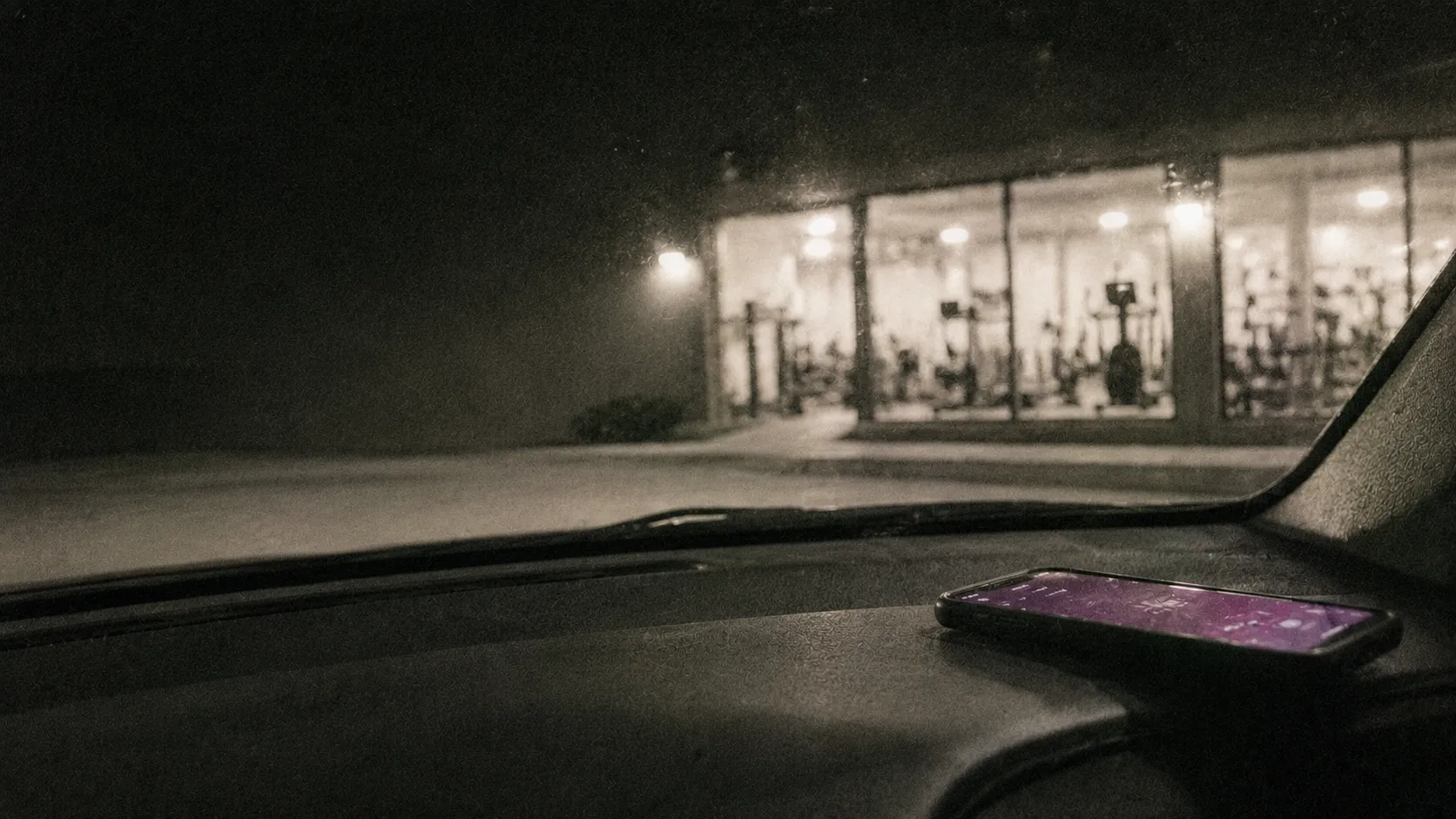
The drive home is the most useful classroom you have, and most people waste it.
You just rolled with someone who exposed a hole in your guard. You felt it, you even corrected mid-round. But by the time you’re parking the car, the moment has cooled into a vague “I should work on guard retention,” and a week later the next round looks exactly the same.
The fix costs nothing and takes one minute, and I’d estimate it has earned me back a couple of months of training time per year.
The 60-second rule
Pick up your phone in the parking lot, open Voice Memos, and talk for sixty seconds — no more. Then stop, save, and go home.
You’re not trying to capture the round. You’re capturing the one beat that surprised you, and the time limit is what forces that selection.
Three prompts that almost always work
When the moment doesn’t surface on its own, I walk through these in order:
- Where did I get stuck? Position, not technique. “He pinned my far elbow” is more useful than “he passed me.”
- What did I try, and why didn’t it work? The mistake is a clue, not a verdict.
- What would I try next time? Speak the experiment, not the conclusion.
Answer even one of them and you’ve got a thirty-second memo that’s worth something next week.
Why this beats writing it down
Two reasons. The first is fidelity: the exact phrasing of “he kept his weight on my hip the whole pass” decays fast, and voice catches it before your memory smooths the detail into something generic. By the next morning, that sentence has usually become “he passed my guard,” which tells you nothing. (The memo is also the first step of a bigger capture–structure–review loop, if you want to take it further.)
The second is friction. You will record a voice note after a round you would never have sat down and written about, and over a year, that compounding gap is the entire point.
Making the note worth re-opening
A voice note alone is half of the system I use to remember BJJ techniques. The other half is making it findable three weeks from now, when the same position comes up again and you’re trying to remember what you figured out.
That’s the specific gap Grapple Flows was built for: feed it the memo and it drafts a flowchart of the position, the reaction, and the alternative — already shaped like something you’ll re-open, instead of an audio file you’ll never scrub through.
Voice to Flow — turn a memo into a flowchart grappleflows.com/voiceBut the rule works without any software at all. Pull out the phone, talk for a minute, name the surprise. It’s the smallest unit of progress in jiu-jitsu, and it’s free.