Open mat is the most honest data you’ll get all week. Five or six rounds against people who don’t share your coach’s curriculum will expose every gap your regular class quietly covers for you. The problem isn’t getting the data — it’s that most of it evaporates by Tuesday.
For about a year I went to Sunday open mats, got beaten in interesting ways, and showed up to Tuesday’s class with nothing to show for any of it. The routine below is what changed that. Twenty minutes on Monday morning, every week I can manage it.
The Monday routine
The structure isn’t rigid, and the timings below are guideposts. On busy weeks I shorten the middle steps. The first step is the only one I never skip.
Start with a voice memo, three minutes. Before anything else, just talk. Not a summary — a brain dump. “The blue belt with the wrestling shots, the one I couldn’t pass, the spot where I kept getting stuck under side control.” Don’t edit and don’t structure; the point is to get the detail out of your head while it’s still vivid. (If you already do post-class voice memos, this is the same habit with a longer leash.)
Pick three losses, five minutes. Three moments where you got beat. Not three people — three moments. A pass you couldn’t stop, a submission you didn’t see coming, a sweep that worked on you twice. Write each one as a position rather than a technique: “he shut down my hip when I tried to invert” is worth far more than “he passed my guard.”
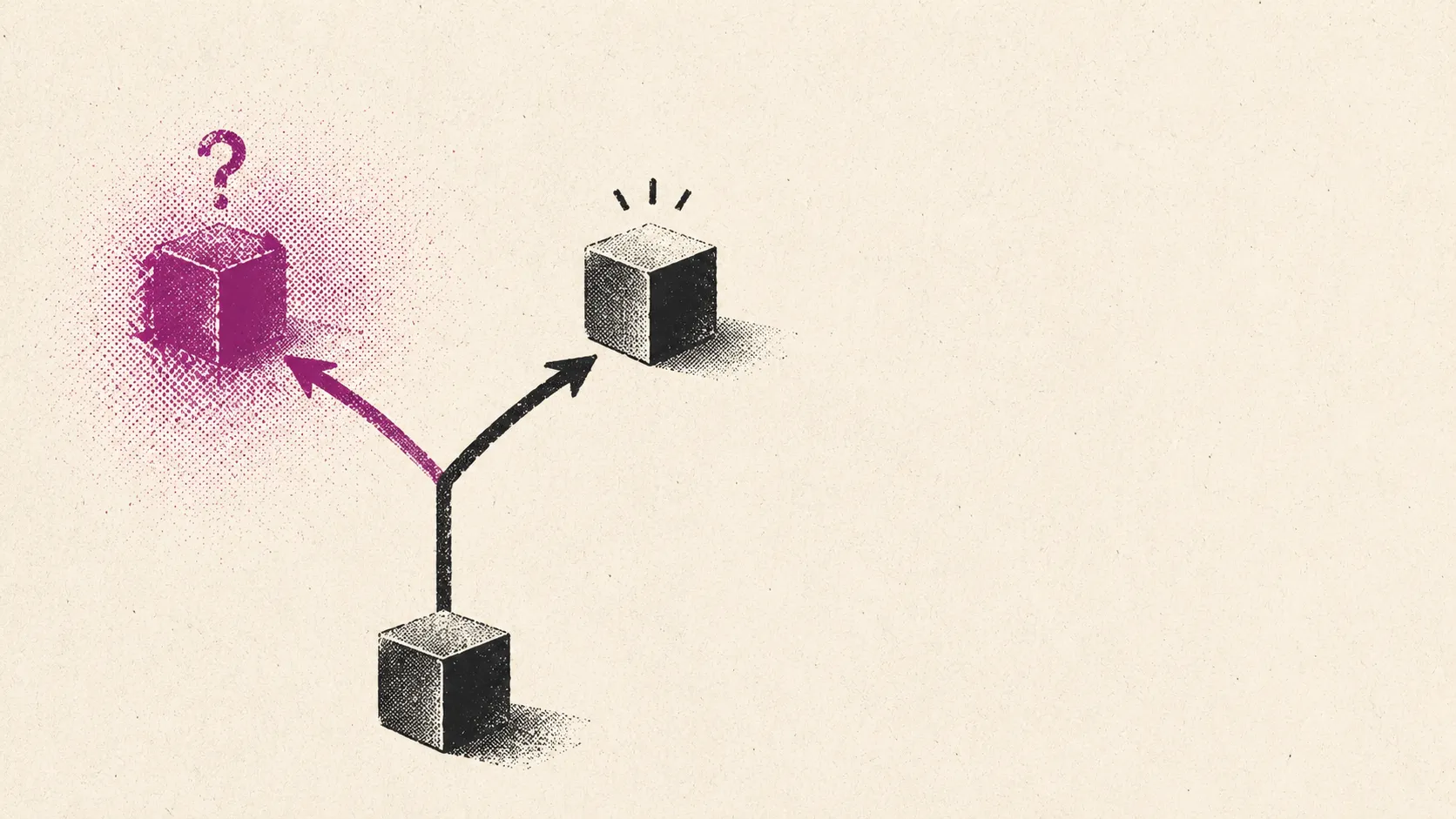
Map the worst one, seven minutes. Take the most-repeated loss and sketch it as a small flowchart: the position, what they did, what you tried, where it broke down. Mapping is what converts “I got passed” into “I understand why I got passed,” and those are very different pieces of knowledge to carry into Tuesday.
Pick one experiment, five minutes. One thing to try in Tuesday’s class. Just one. Put it somewhere you’ll see it before you walk into the gym.
Why three losses, not five
One loss is a coincidence — it could be the partner, could be the day. Five is overwhelming, and you end up addressing none of them. Three forces you to rank, and ranking forces you to think about which gap is actually costing you the most rounds.
I’d be lying if I said I always pick the right three. Maybe a third of the time I realize mid-week that the loss I chose to focus on wasn’t the most expensive one, and the real leak was something I’d unconsciously avoided writing down. That’s useful information in itself, and it usually means I write four the next week.
The Tuesday test
If the Monday routine worked, Tuesday feels different. You notice the position you mapped — actually notice it, in real time, the moment it appears. You run the experiment. It either works, and you keep it, or it doesn’t, and you revise next week. Either way the week has become a feedback loop instead of a treadmill.
If Tuesday felt exactly like last Tuesday, the review didn’t take, and in my experience the missing piece is usually the chart. Without something visual to re-open, the lesson decays before you get a chance to use it.
Try it free Turn your open mat voice memo into a flowchart in one click. Create a free account →What ten weeks of this looks like
Do this for ten weeks and you have a stack of ten charts covering your ten biggest leaks. In my experience roughly a quarter of them will already be patched by the Tuesday experiments, and another quarter becomes your training plan for the next stretch. Open mat generates the data, Monday converts it, Tuesday tests it.
It took me too long to realize open mat wasn’t inherently more valuable than my regular classes. It became more valuable when I started using the data it produced. Without the Monday review, it’s just another roll session that happens on a Sunday.