Closed guard gets written off in the modern no-gi era: too slow, too easy to stall from, a relic now that everyone’s hunting legs. Against a high-level leg-locker, fair enough. But for everyone from white to brown belt, closed guard is still one of the highest-percentage positions in jiu-jitsu, and the reason is simple: your opponent can’t pass until they create space, and the moment they create space, they hand you something.
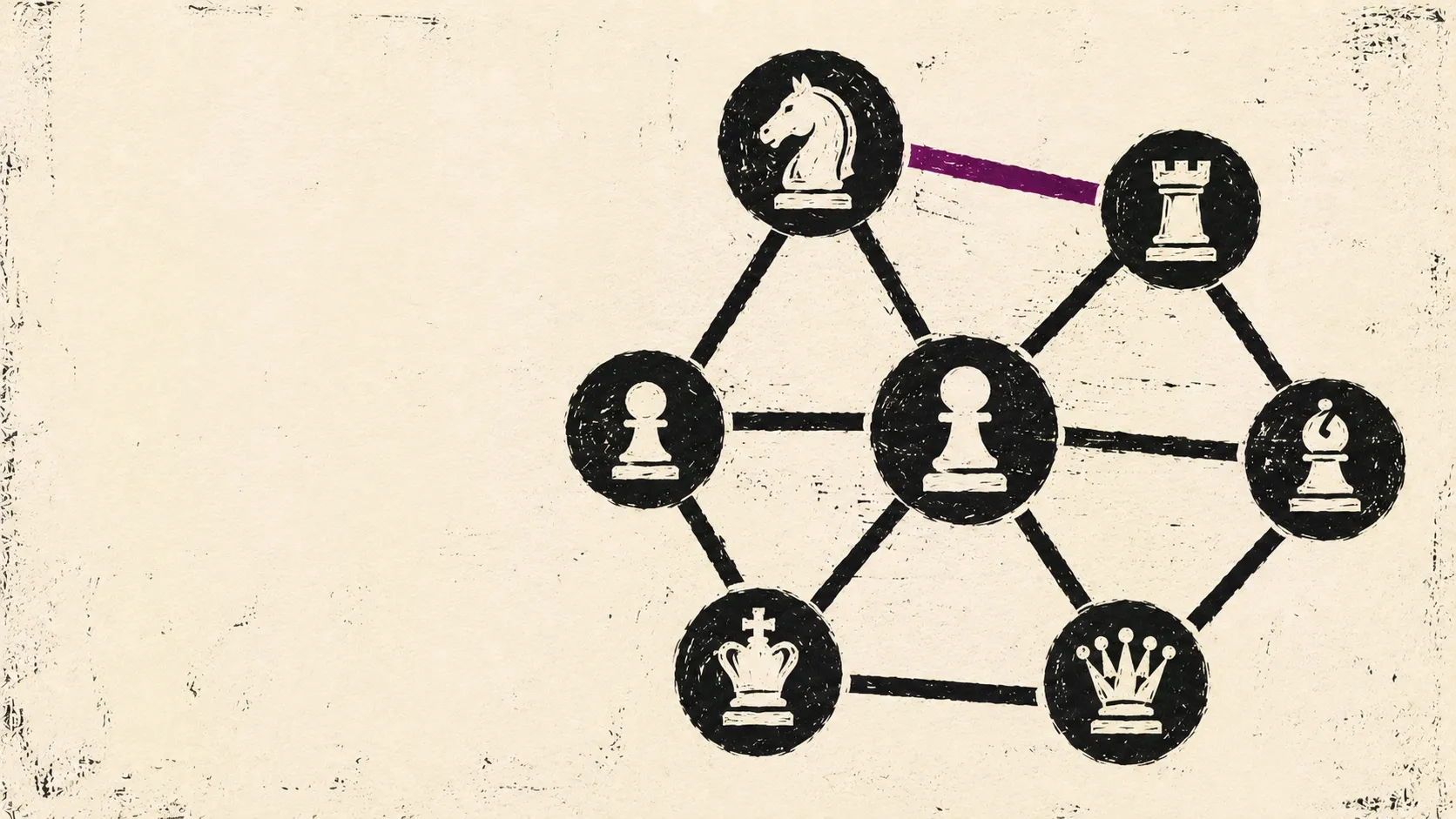
The problem was never the position. It’s that most people collect closed guard attacks like trading cards: a cross choke here, an armbar there, a hip bump they hit once in 2019. What they never learn is the thing that makes closed guard actually dangerous — that the attacks aren’t separate moves at all. They’re one connected system, linked by what your opponent does to defend.
Control is the price of admission
You don’t have a closed guard attack system until you can keep an opponent’s posture broken. Let them sit up — spine stacked straight, hips driving back — and every submission you know is a non-starter. They posture, pry your ankles open, and pass. So the system starts before any attack: break the posture, and keep it broken.
Three control families cover most of what you need:
- Collar-and-sleeve. A cross-collar grip deep behind the neck, your other hand pinning a sleeve or wrist. This is the engine room. It threatens the choke and kills the post they need to stand up.
- Overhook. You trap one arm over the top, isolating it for the triangle and omoplata family.
- Underhook and wrist. Less about submitting, more about climbing up to sweep or take the back.
Pick one to live in. Which attacks are available branches out entirely from which control you’re holding, and trying to play all three at once is how you end up holding none of them.
Why it’s one web, not eight moves
Take the collar-and-sleeve. You lead with the cross choke — not because it’s your favorite finish, but because it forces a binary: defend, or get choked. Everything else opens from how they defend it.
If you’d rather start from an existing map than a blank page, the closed guard flow charts on Grapple Flows are a good place to begin.
Here’s the same position you’d draw as a flowchart, with the choke at the top and each defense leading to its own finish:
- They do nothing → finish the cross choke.
- They strip your choking grip with both hands → both arms are now low and committed. Throw a leg up for the armbar, or climb to a triangle if one arm’s in and one’s out.
- They posture up and try to stand → they’ve handed you the hip bump sweep, or a guillotine if the head drops on the way up.
- They drive forward to stack and smother → that forward weight is the flower sweep, or an omoplata as the trapped arm slides past your hip.
Look at what’s actually happening: you’re not choosing the attack, your opponent is. Each defense to the choke is a door to a different finish, and they only get to pick which door they walk through. That’s the whole point of running it as a system. You stop guessing which move to try, and you start reading which reaction they gave you.
Switch your control and the same logic produces a different family. From a tight overhook, defending the arm-trap triangle pulls them into the omoplata; ducking the head feeds a Marcelo-style guillotine; basing away from the overhook gives up the sweep to that side. Same principle, different room. The scissor sweep works the same way, with four counters feeding four branches.
Try it free Map your closed guard as one connected attack web instead of eight loose moves. Create a free account →Where it falls apart
Three failure modes account for most dead closed guards, and none of them are technique problems:
- No posture break. You attack from a guard you don’t actually control. They posture, your “system” evaporates, and you decide the cross choke doesn’t work. The choke was fine. You skipped the setup.
- Single-attack tunnel vision. You want the cross choke so badly that when they defend it, you keep fighting to finish the choke instead of taking the door they just opened. The defense was the gift. Take it.
- Letting go to re-grip. Every time you break your grips and reset, they posture back an inch. Chain attacks off the grips you already have rather than starting from scratch each time.
Fix those three and a “mediocre” closed guard doubles in danger without you learning a single new submission.
Drill the links, not the moves
Isolated reps of a cross choke teach you the cross choke. They don’t teach you the armbar-when-they-defend, which is the part you actually need under pressure. So drill the branches, not the finishes.
Put a partner in your closed guard. You start the cross choke every single rep. They pick one of the four defenses at random, and you hit the matching attack. Ten minutes of that builds more usable closed guard than a hundred solo choke reps, because you’re wiring the decision, not the motion. After a couple of weeks the routing becomes automatic: they posture, and your hips are already turning for the bump before you’ve consciously decided.
See your own web
A web like this dies in a linear notebook and comes alive as a flowchart: the cross choke at the top, four branches below it, each defense pointing at its finish. Draw it once and the gaps jump out. Most people find they’ve drilled two branches into the ground and barely touched the other two.
That’s the use case Grapple Flows was built for. Map the branches, attach a short clip to each finish, and update it as you find new reactions on the mat. What you end up with is the thing this whole post is describing — your closed guard as a system you can actually see, instead of one you half-remember.
Common questions
Is closed guard still worth training for no-gi? Yes, up to a high level. The finishes shift toward the hip bump, guillotine, and arm attacks rather than the cross choke, but the underlying logic holds until you’re deep into elite, leg-lock-heavy competition: they can’t pass without creating space, and space exposes them.
What’s the highest-percentage closed guard attack? In the gi, the cross collar choke, because it forces that defend-or-get-choked decision that opens everything else. In no-gi, the hip bump and guillotine carry more of the load. But the real highest-percentage “attack” is the chain itself, not any single finish.
Why do I keep losing my closed guard? Almost always posture. Attack before you’ve broken their posture and pinned the arm they need to stand, and they’ll posture up and pass every time. Control first, then attack.