For about a year of my white belt I thought my problem with De La Riva was that I didn’t know enough techniques. I’d watch instructionals, drill new sweeps, get to DLR in rounds, and then get leg-dragged before I could try any of them. The actual problem wasn’t a technique gap. I was trying to play “De La Riva” as one thing when it’s really four things sharing a hook.
If you’re stuck in that loop, this is the routing map I wish someone had given me.
DLR isn’t the hook
The first thing that helped was realizing the hook is the cheapest part of the position. What keeps DLR alive is three contact points working together: the hook (your far leg behind their lead knee), the grip (sleeve or wrist on their same-side arm), and the bottom hand (collar, sleeve, or pant, your pick).
Most beginners — me included, for an embarrassingly long time — protect the hook with all their attention and let the other two slip. The hook alone is meaningless. The hook plus the grips is the position.
The four reactions you’ll actually see
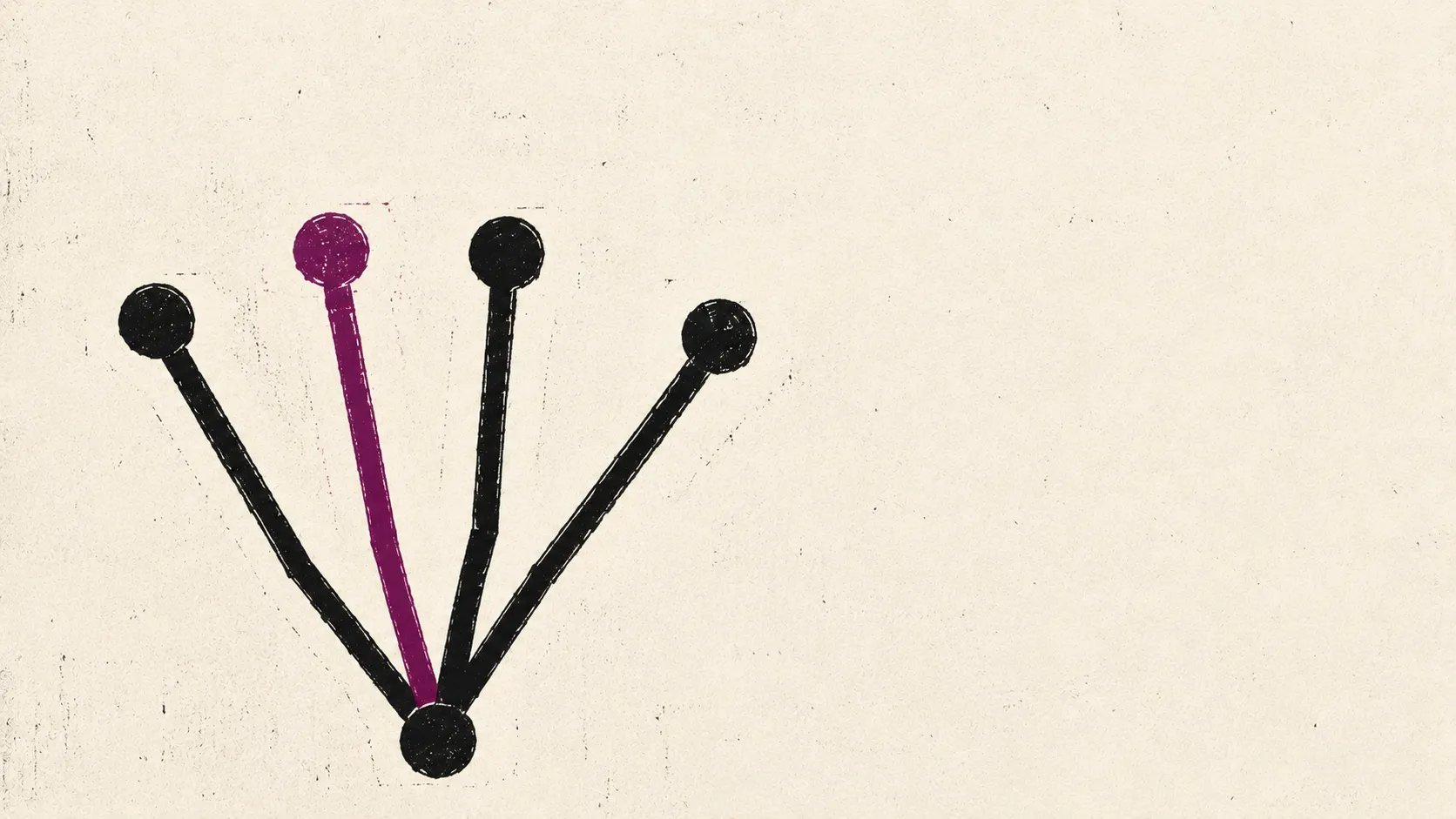
It’s more useful to talk about what the opponent does than about which technique to learn next, because the technique you need is just the response to whichever reaction they pick. Nearly every opponent does one of four things.
They posture up and stay tall. This is your sweep window: berimbolo, X-guard entry, kiss-of-the-dragon, whatever your body does. Their hips are far away, you have time, and you get to initiate. It’s the only branch that feels like “playing DLR” in the highlight-reel sense, and it’s also the rarest, because most opponents won’t give you tall posture for long.
They sit down and stack. The sweep angle is gone, but they’ve handed you something else: invert underneath, attack the back exposure, or transition to single-leg X. The mistake here is forcing a sweep that needs distance you no longer have — the same reason I switch from spider to lasso guard when someone sits down and pressures.
They circle toward a leg drag. This is where you’ll actually live, and it’s where I lost most of my early DLR rounds. The leg drag is the highest-percentage pass against DLR at every level, and almost nobody drills the answer. The instinct is to grip the hook tighter, which is exactly what the leg drag wants from you. The right move is to release pressure on the hook and re-pummel before they cut the angle. If you only drill one branch this month, make it this one.
They smash the knee down. Frame on the bicep, hip out, switch to half guard. This isn’t losing — it’s a planned exit. Half guard is a position you can fight from; “trying to save DLR” while they knee-cut through it is not.
How I’d drill it
Three rounds with a partner who’s willing to limit themselves, ten minutes each. First round, they posture up only, and you sweep. Second round, they sit down only, and you invert or take the back. Third round, they leg-drag only, and you re-pummel or escape clean to shin-on-shin.
Branch isolation is the step everyone skips. Live rolling tries to teach you all four branches at once, so you half-learn each of them. A month of isolation drilling moved my DLR further than the previous year of unstructured rounds — the same thing I later found with the scissor sweep’s attack tree.
<a class=“inline-cta” href=“https://grappleflows.com/register?utm_source=blog&utm_medium=referral&utm_campaign=post-de-la-riva-guard-decision-tree&utm_content=inline-cta&ref=blog”
Try it free Map your DLR branches into a single flowchart you can edit as you learn. Create a free account →
The reframe
DLR stopped being a maze for me when I stopped trying to play “De La Riva” and started playing whichever branch the opponent was offering. That sounds like semantics, but the shift took about a month of isolation drilling, and afterward the position felt like a different guard — not because I’d learned anything new, but because the routing had become automatic.
If you’ve been stuck on DLR for a while, the techniques almost certainly aren’t your problem. The map is the part that’s missing.