BuddyTape started with a simple idea: Jiu-Jitsu is easier to study when you can see how positions connect. A guard pass creates a reaction. That reaction opens a back take. A failed sweep leads to a different entry. The more you train, the more your game feels less like a checklist and more like a map.
BuddyTape gave grapplers a free way to build that map. Grapple Flows is the next version of the same idea.
Why flowcharts
Most people who train have some kind of note system, even if they wouldn’t call it that. A notebook in the gym bag. A Notes app folder full of reminders like “don’t let them win the underhook.” A pile of saved Instagram posts and screenshots that seemed important at the time.
Those systems capture information. But Jiu-Jitsu isn’t just information. It’s timing, sequence, and reaction. A move makes sense when you know where it comes from, what problem it solves, and what tends to happen next.
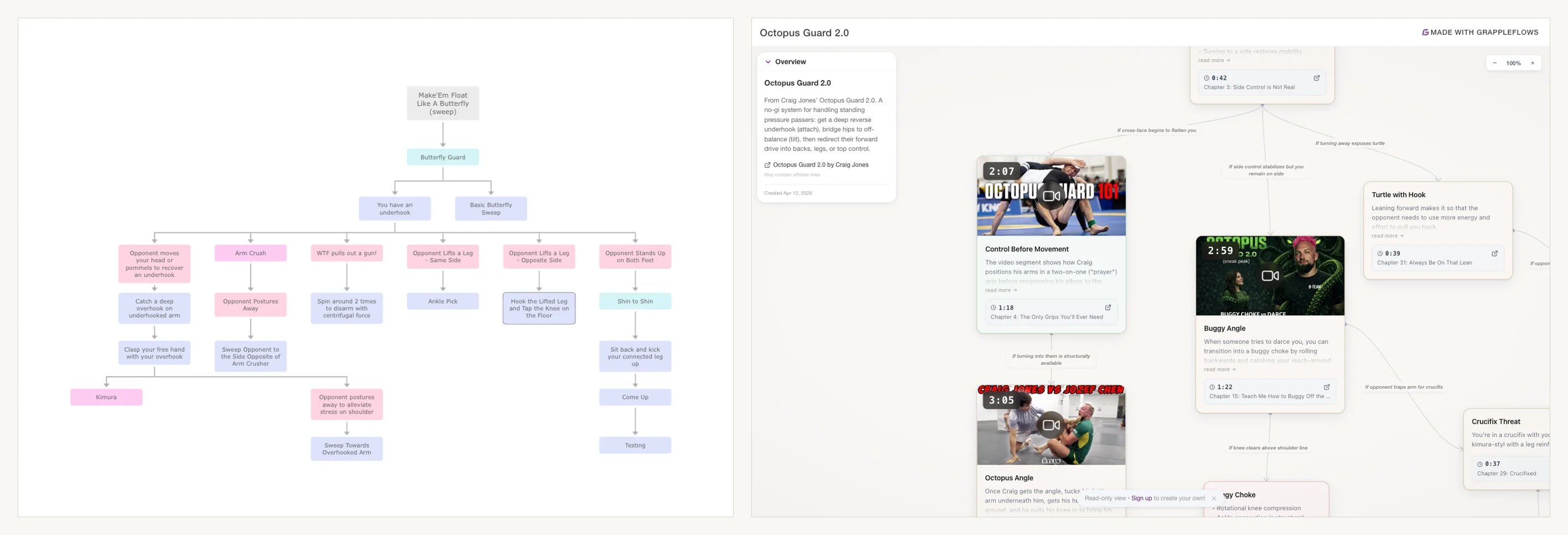
A good flowchart shows the shape of a position. Your main options. Your partner’s likely responses. Your follow-ups. The spots where your understanding still feels thin. From headquarters, what are your main passing options? If the knee cut stalls, where do you go next? If they win the underhook, what changes? Hard to answer from a flat list of notes. Much clearer on a map, which is why flowcharts stick after class when bullet notes don’t.
Six years in, still a community tool
BuddyTape launched in 2019. Since then, thousands of grapplers have used it to map their games, and we’ve kept the promises we made at the start: no data sold, no ads, free to use. That isn’t changing.
What is changing is what we can build. The original infrastructure got us a long way, but it wasn’t built for everything we want to do next — better mobile, deeper video integration, AI-assisted organization, smoother collaboration. Rebuilding the foundation lets us actually ship those things instead of bolting them onto something that wasn’t designed for them.
Why the rebuild
How people study Jiu-Jitsu has changed. More learning happens through video. More techniques are saved from Instagram. More study happens on a phone between rounds or at home after open mat.
BuddyTape needed to better fit that reality. Easier on mobile. Clearer to navigate. More directly connected to the way grapplers actually collect ideas. The name needed to catch up too. “Grapple Flows” says what the tool does: mapping the flow of grappling, how positions connect, how one exchange leads into the next.
What Grapple Flows is
A mobile-friendly tool for building clean, visual BJJ flowcharts, with a bigger focus on organizing the rest of your study — saved videos, match clips, screenshots, and notes. Use it to map passing systems, guard sequences, escapes, submissions, counters, class notes, or competition plans.
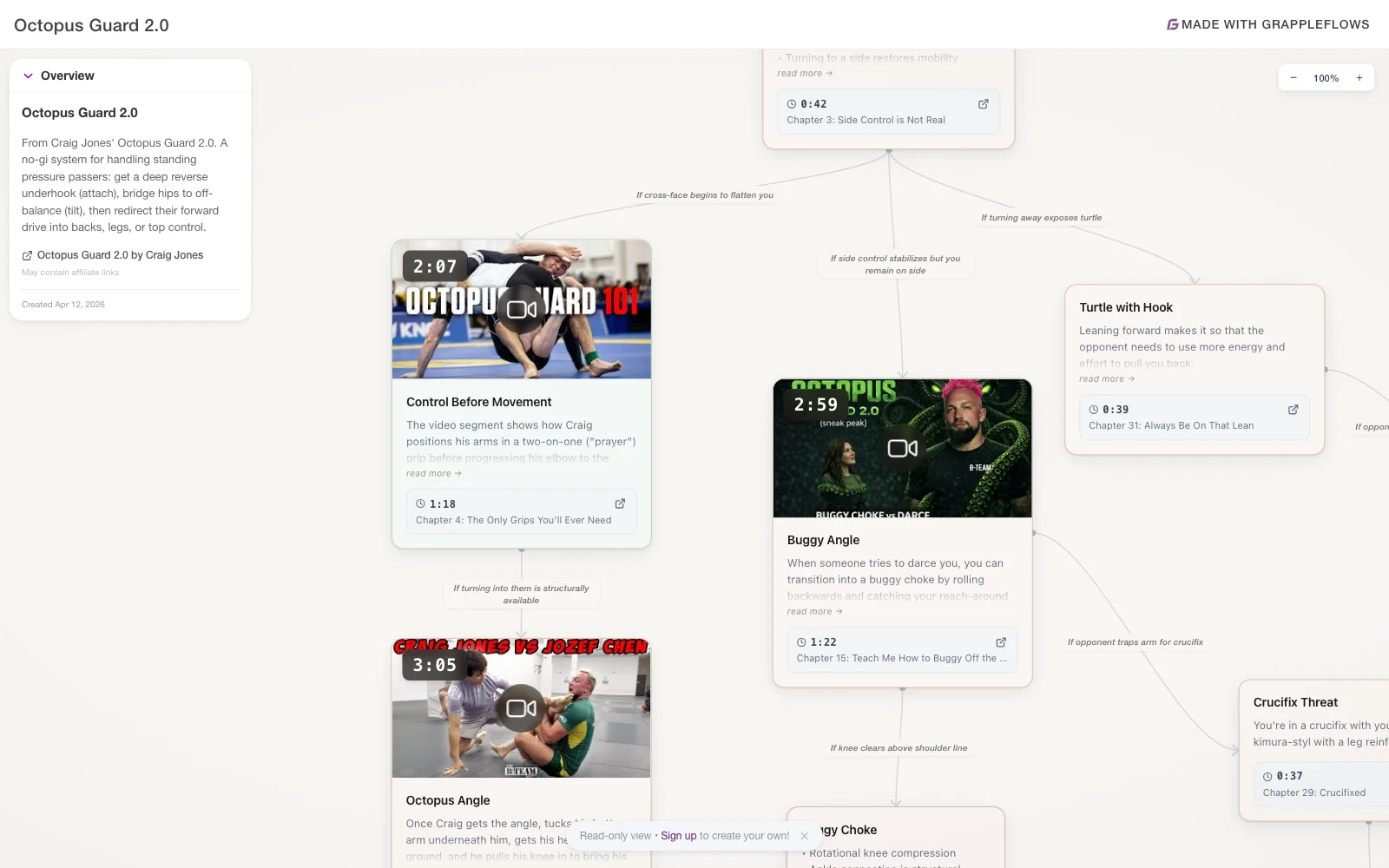
What’s new:
- More ways to bring your media into the same map
- AI to help organize what you save
- Easier collaboration with training partners and coaches
A better way to study after class
After class, it’s easy to forget the important details. You remember the general idea but not the exact grip. You remember the reaction your coach emphasized, but not the follow-up. If you don’t capture it soon, the lesson gets blurry, which is why a sixty-second voice note on the drive home is worth the minute.
Turn a rough idea from class into a simple structure: start here, expect this reaction, go here next. Review it before the next session. Refine it after you test it again. Over time, the maps start to show patterns. Maybe you always lose the same position. Maybe you have three entries into a pass but no clear finish. Maybe your escapes are disconnected from your guard retention. Seeing those gaps gives your training a direction.
The most useful maps usually start simple. One position, a few options, a few common reactions. Details build as your understanding does.
Built for people who train
Grapple Flows isn’t trying to replace coaching, drilling, or mat time. The work still happens on the mat. But between sessions, it helps to have a place where your game can take shape — where your notes aren’t just stored, they’re connected.
That was the heart of BuddyTape. It’s still the heart of Grapple Flows. Jiu-Jitsu makes more sense when you can map it.